
01 — The build
Build it. In front of you.
A visual builder where the canvas is the page. Drag a block, set a token, watch it render — then ship exactly what you saw, pre-rendered and cached, to whatever host you already pay for.
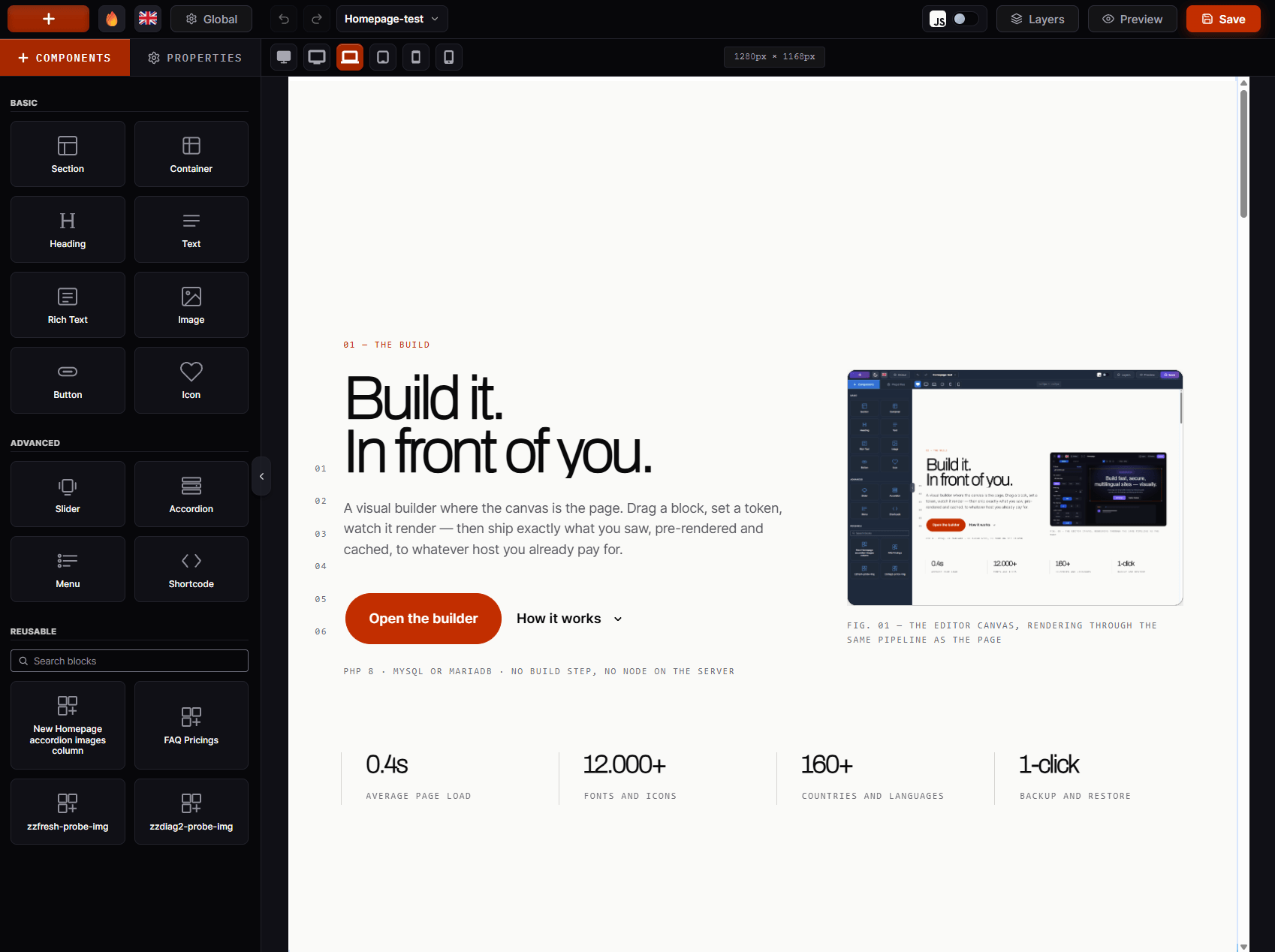
fig. 01 — the editor canvas, rendering through the same pipeline as the page
0.4s
Average page load
12.000+
Fonts and icons
160+
Countries and languages
1-click
Backup and restore
02 — The canvas
What you move is what ships.
There is no preview mode and no export step. The editor renders through the same component pipeline as the public page, so the canvas is not an approximation of the result — it is the result.
fig. 02 — a page assembling itself, scrubbed by this scroll
01
Drag
Blocks land in a real CSS grid, not at absolute coordinates, so the layout you build is the layout that responds.
02
Style
Every control writes a design token. Change the token once and each of the fifty places that used it follows.
03
Ship
The page is rendered to HTML when you save and served from cache, so a visitor never waits for the builder.
03 — What it does
Systems, not features.
One canvas, one set of tokens
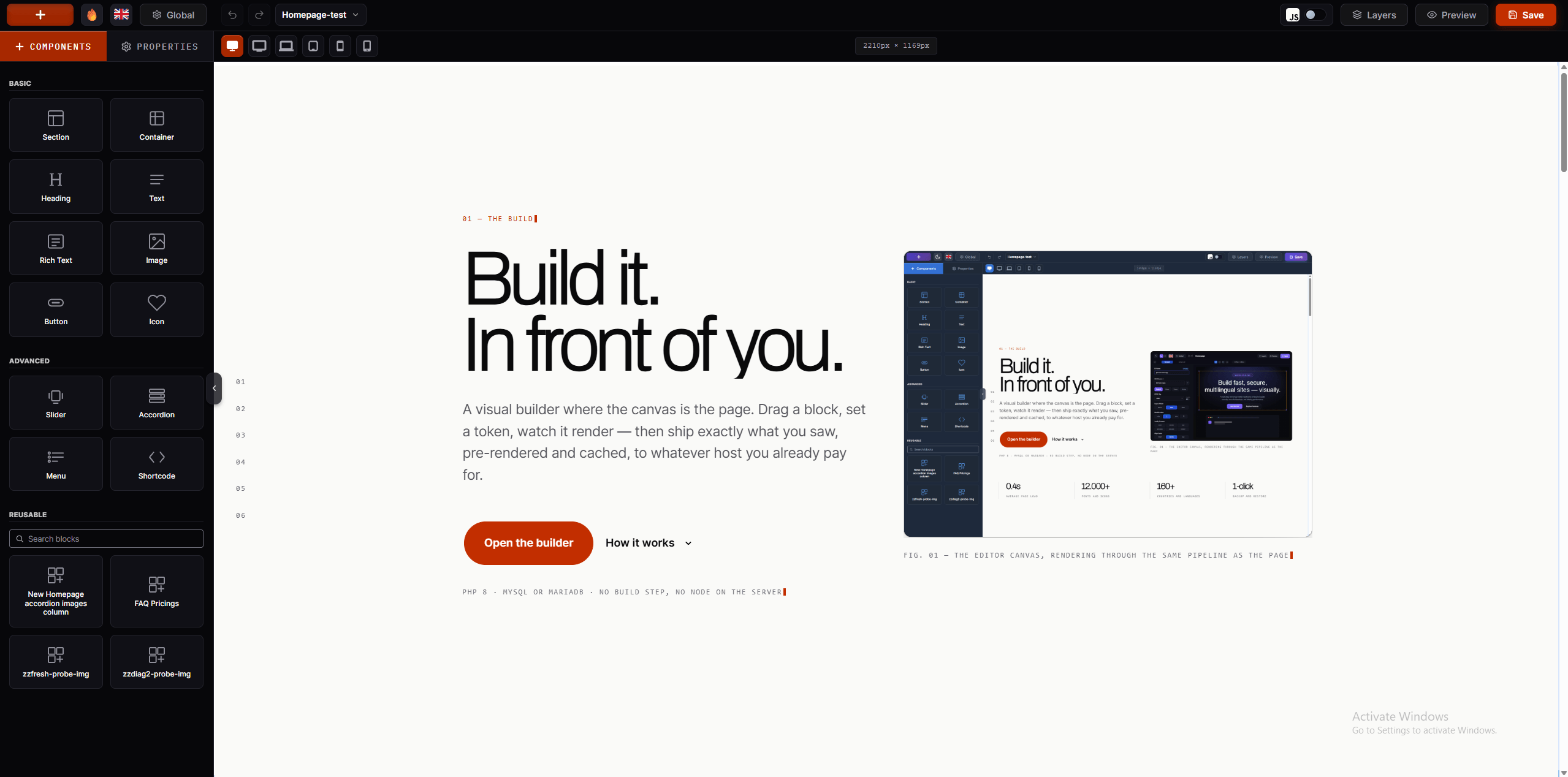
Sections, containers and components compose into a document, rendered by the same pipeline as the published page. Styles are classes and tokens, not inline soup, so a responsive type scale is one change, not fifty media queries.
One render pipeline for canvas and page
Five device tiers with per-tier token overrides
Reusable blocks and class styles shared across pages
Performance measured, not asserted
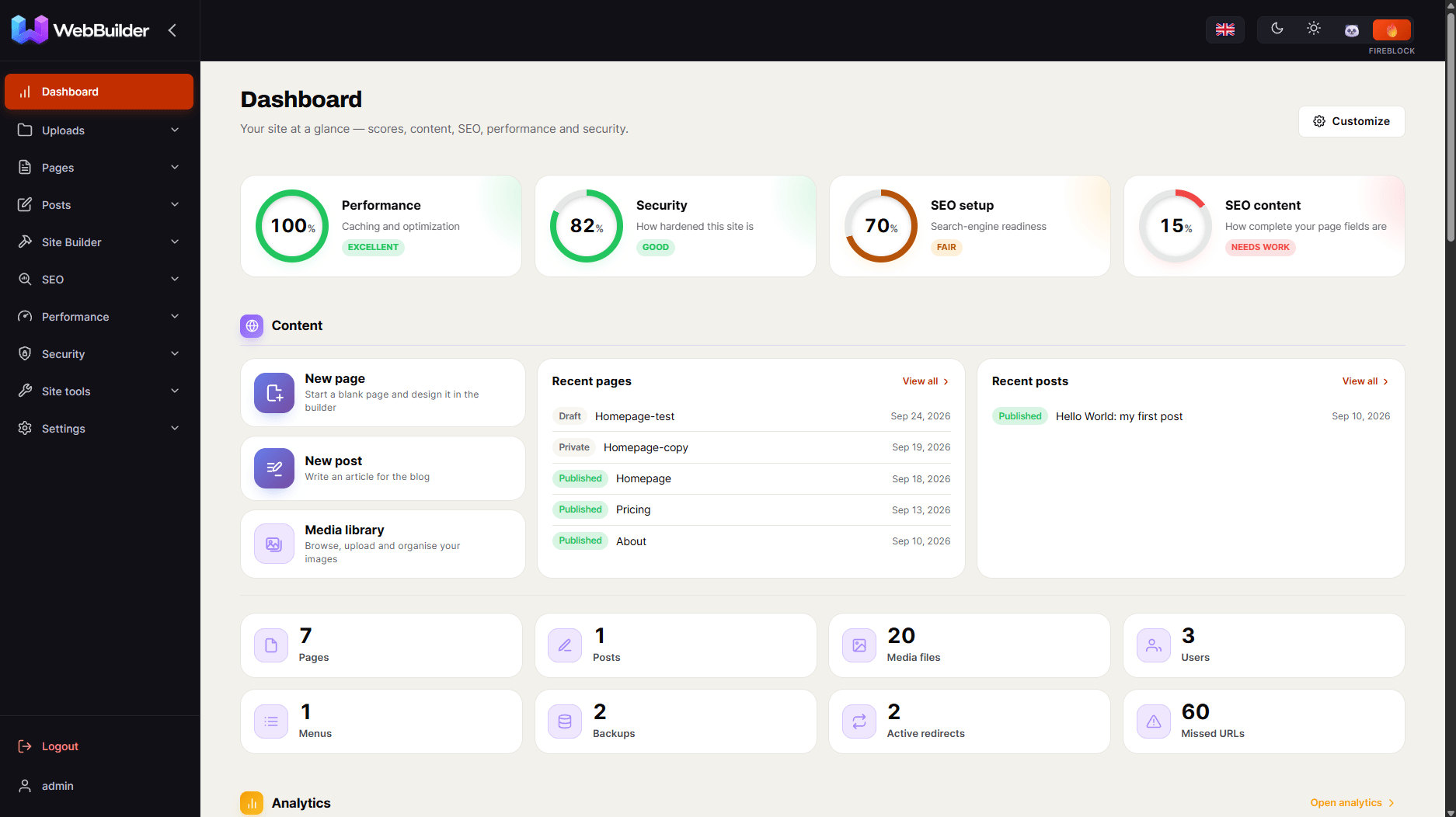
Object caching behind one interface, bundled and fingerprinted assets, pre-rendered pages, and Core Web Vitals collected from real visits rather than a synthetic lab run. What the panel reports is what your readers actually experienced.
Redis, Memcached or file cache
Bundled, fingerprinted assets
Field Web Vitals, not lab scores
Backups you can actually restore
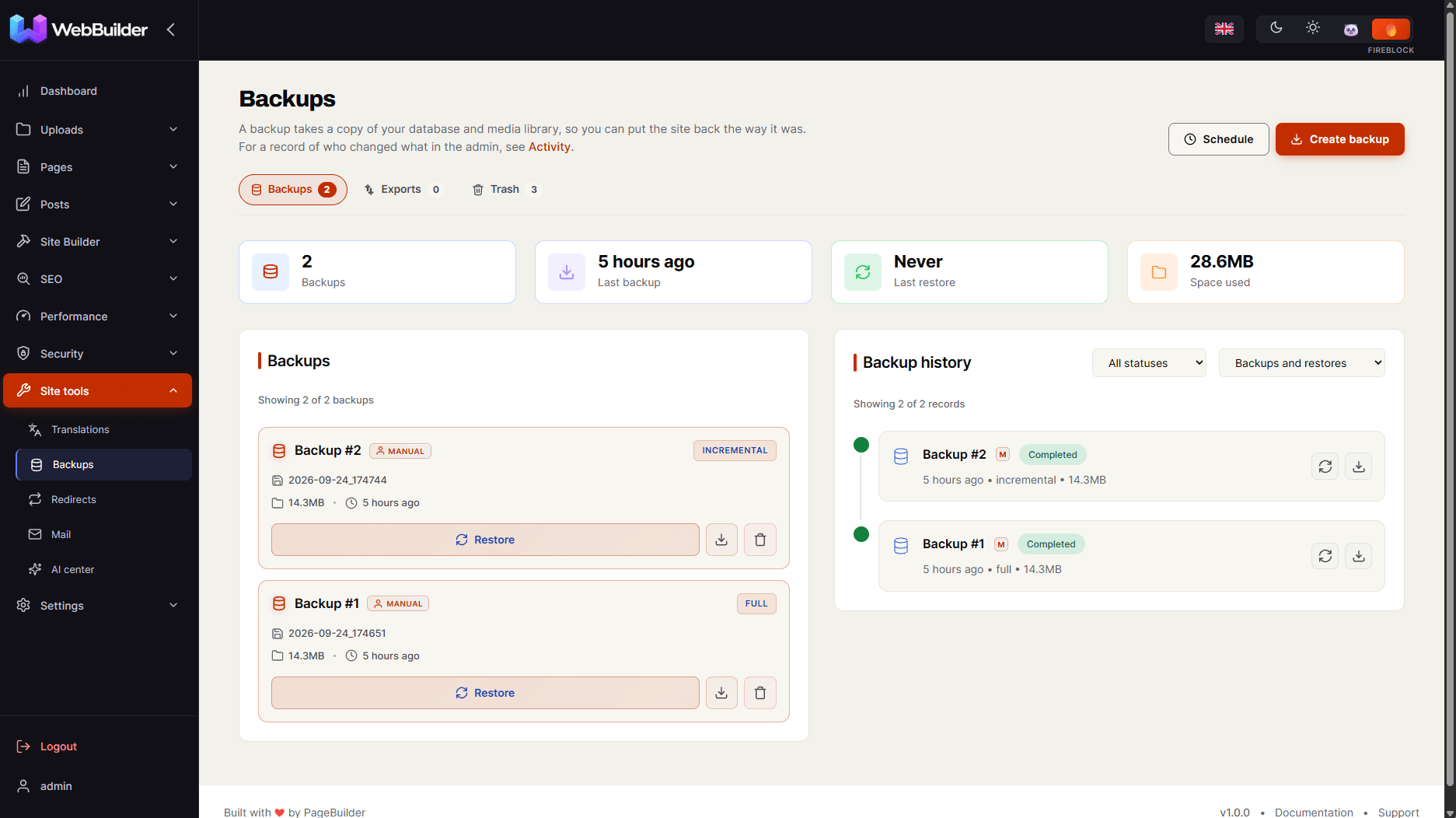
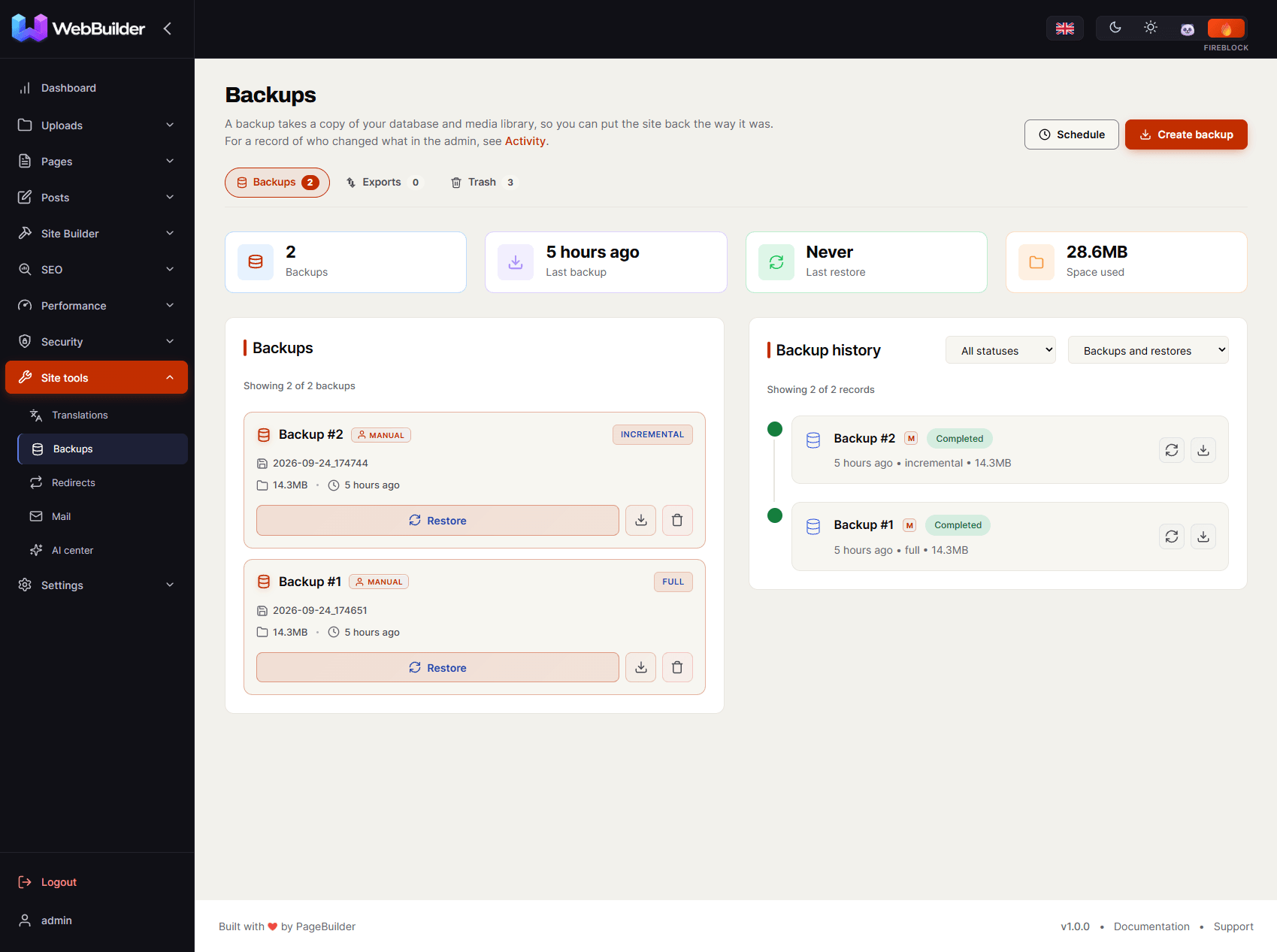
Scheduled, on-demand and pre-update backups, a streaming archiver that does not need more memory than a shared host will give it, and a restore that runs in-line on hosts where there is no worker to run it.
Scheduled, on-demand and pre-update
One-click restore and full-site export
Stale-job reaping when a host kills a process
Seventeen languages, one document
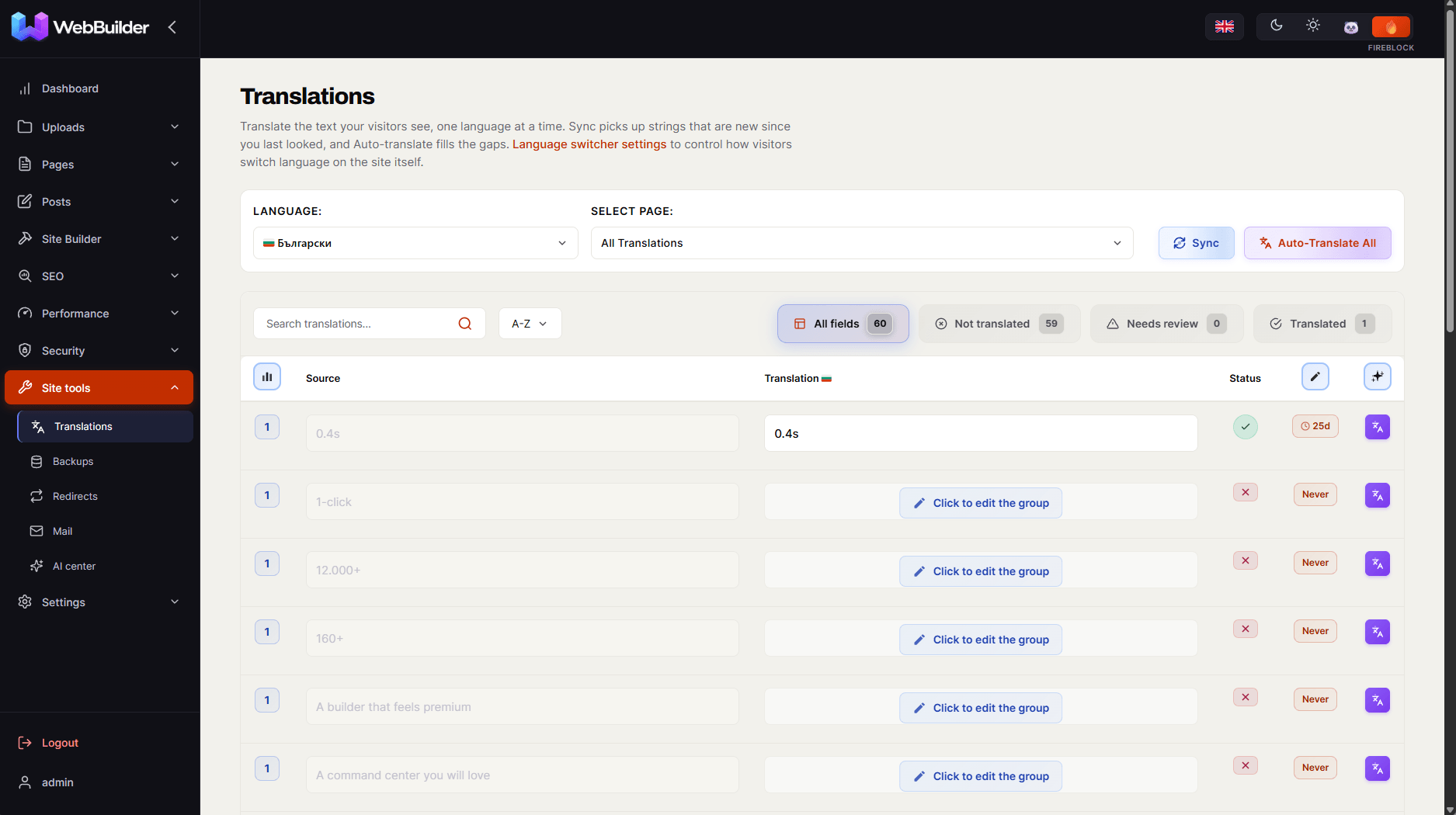
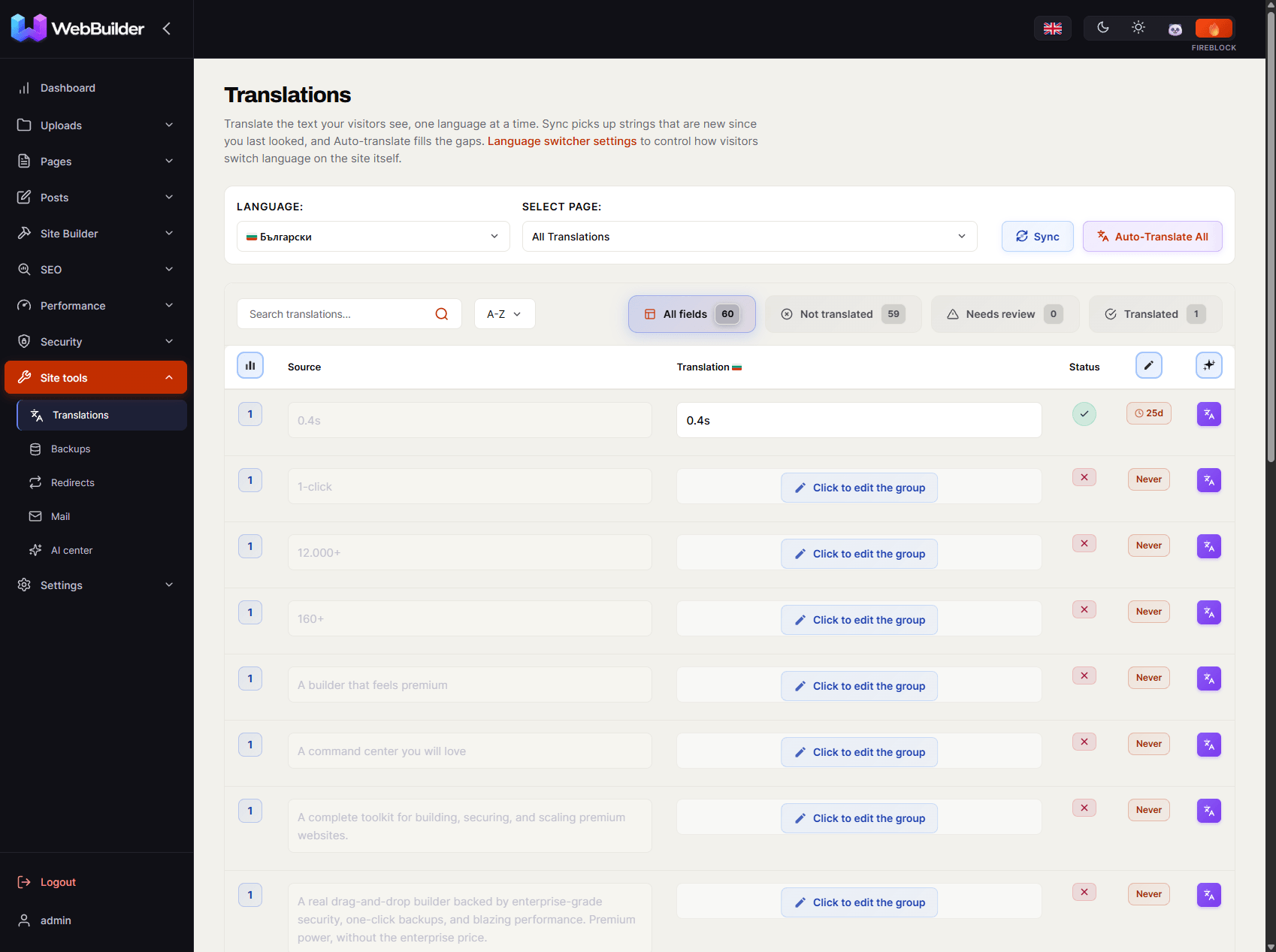
Locales are a property of the page rather than a second copy of the site. Edit translations side by side, auto-translate a whole page, and serve per-region URLs from the same document — one page to keep current, not seventeen.
Seventeen locales shipped
Side-by-side translation editing
Per-locale slugs, titles and meta
04 — Built like infrastructure
Every request passes five gates.
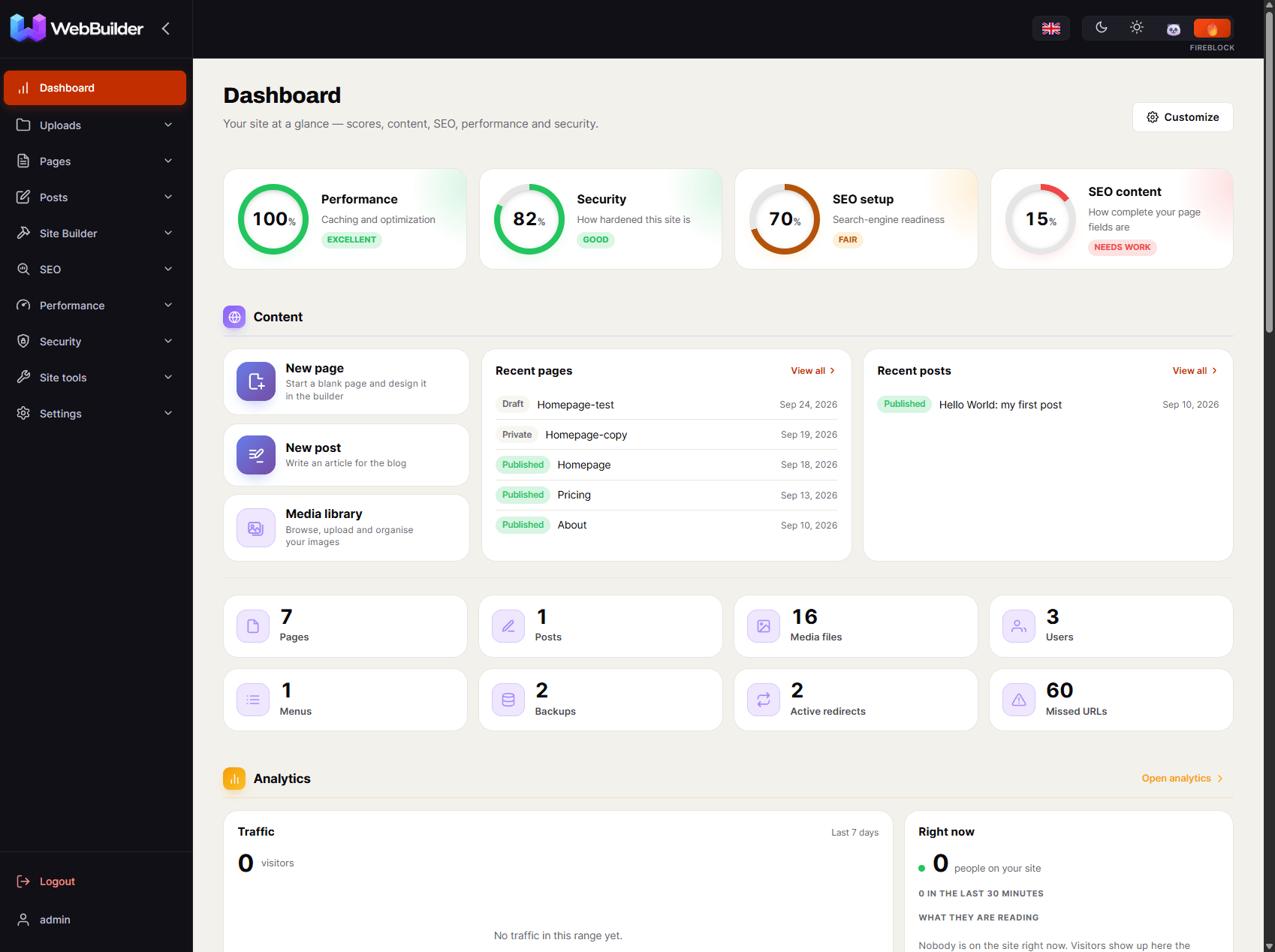
Security here is not a settings page you are expected to find. It is five layers a request crosses before anything of yours is touched, and each one is on the moment you install.
01
Firewall
Rules, a blocklist and rate limits reject a request before it reaches application code.
02
Session
TOTP two-factor, login-attempt throttling, and sessions that can be revoked per device.
03
Input
Every write crosses a sanitizer — HTML, uploaded SVG and config values each get their own.
04
Output
A per-request CSP nonce. Nothing inline runs unless this render emitted it.
05
Recovery
Scheduled backups, one-click restore, and a reaper for jobs a host killed mid-run.
05 — Trusted
What people say when it is theirs to run.
A self-hosted product earns its reputation in the months after launch, not the week of it. These are teams running it on their own servers, with their own backups, on their own terms.
We replaced a page builder, a translation plugin, a backup service and a monitoring tool with one install. The bill went from four subscriptions to none.
Name Surname
Role at Company

The canvas is the page. I stopped opening a second tab to check my work some time in the second week and never went back.
Name Surname
Role at Company
Our security review came back with nothing to fix. That has not happened with a CMS before.
Name Surname
Role at Company
Seventeen locales, one document, one editor. Translation stopped being a project and became a checkbox.
Name Surname
Role at Company
It runs on the cheapest hosting we could find and still returns pages in under half a second.
Name Surname
Role at Company